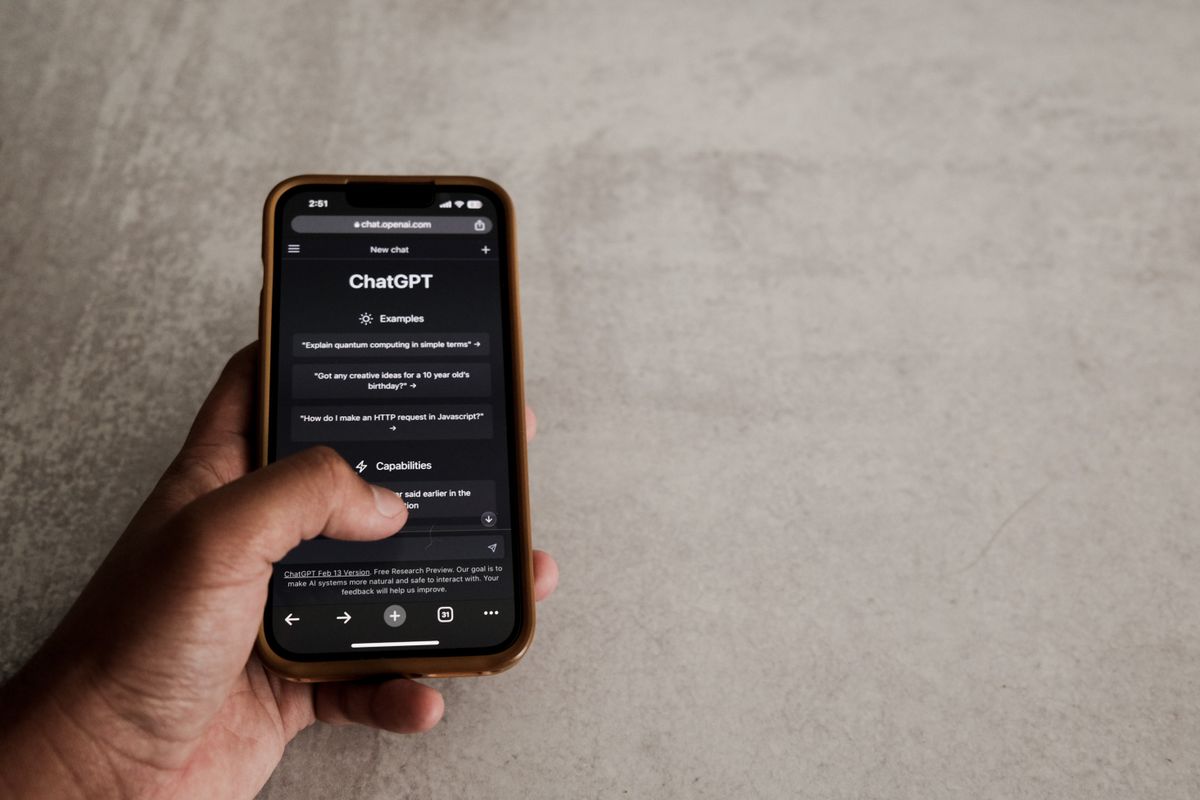
ChatGPT has had ads since 2026. An ad appears under the answer when a person is discussing a problem your product solves: choosing a hotel, looking for a service, comparing courses. We check whether the channel is available to your business, prepare the landing page and launch campaigns with analytics.
Ads in ChatGPT: paid OpenAI ads shown as a separate block under an AI answer. The block is labeled as sponsored, the ad is picked by the topic of the conversation, and the answer itself does not depend on advertising.
How ads in ChatGPT work
OpenAI began testing ads in February 2026 in the US and by the end of October had opened them in 89 markets. According to the company, there are already more than 100,000 advertisers in the channel, and 1.2 billion people use ChatGPT every week (OpenAI, OpenAI).
Where the ad appears
One ad block is shown under the answer, with an image or a carousel of several pictures, a headline, a description and a link. It is labeled as sponsored and visually set apart from the answer. Under OpenAI’s rules, advertising does not affect what ChatGPT answers.
Who sees the ads
Ads are seen by adult users on the free plan and the Go plan. There are no ads on the Plus, Pro, Business, Enterprise and Edu plans. They are not shown to users under 18, in temporary chats, or next to sensitive topics: health, mental health and politics.
How the system picks an ad
Instead of keywords there are context hints: you describe situations where the ad would be useful. The system looks at the topic of the conversation, the ad text, the landing page and the targeting settings, and among suitable ads it chooses with the bid in mind (OpenAI help).
ChatGPT ads and search ads
| ChatGPT ads | Search ads | |
|---|---|---|
| Where it appears | Under an AI answer | In the search results |
| How ads are matched | By conversation topic and context hints | By keywords |
| How many ads | One block under the answer | Several ads on the page |
| Payment | Per impression or per click | Mostly per click |
| Average prices by niche | Not published yet | Known from years of market history |
Who can run ads in ChatGPT
The most important limit: the self-serve ad account requires the paying entity to be in a supported country, from OpenAI’s list of countries. Check availability first, before you spend time on the account. The list includes EU countries, the UAE, Israel, Turkey, Serbia and others.
The channel fits if you have:
- a paying entity registered in a supported country;
- a product or service for an international audience: export products, online courses, apps, travel;
- a topic that the ad policy allows.
A new account may at first show ads only in the country of its legal entity. Delivery in other countries opens after identity verification and a certain amount of spend.
Which topics cannot be advertised
OpenAI’s ad policy bans alcohol and tobacco, gambling, dating and adult content, political advertising and mind-altering substances. Financial, medical and legal services outside the US are generally not allowed. The ad and the landing page are reviewed together: an allowed ad cannot lead to a page with banned content.

Not sure the channel fits you? Tell us about the company, the country of the paying entity and the product. We will check the limits before you spend time on the account.
What we do
How we launch ads in ChatGPT
- 01
Availability check
Country of the paying entity, topic, delivery markets and ad policy requirements.
- 02
Landing page
We check that the page is open to OpenAI’s robots, makes sense without context and matches the ad.
- 03
Analytics
We connect the pixel or the Conversions API, UTM tags and goals in GA4, so that we count leads and not only clicks.
- 04
Campaigns
Goal, budget, countries and cities, platforms, context hints and negative phrases.
- 05
Ads
Headlines, descriptions and images: one square image or a carousel of 4–6 pictures.
- 06
Management
We read the reports, turn off weak ads and move budget to what brings leads.
Budget and payment
OpenAI sets the minimum daily budget: 25 USD, 15 EUR and so on, depending on the account currency. The budget is counted as an average over a week: on a single day spend can reach up to two daily budgets, but over the week no more than seven (OpenAI help).
You can pay for impressions or for clicks. The “conversions” goal optimizes delivery for leads, but you pay for impressions or clicks, not for each lead.
What we do not promise
OpenAI does not yet publish average performance figures by niche. So we do not name a price per click or a number of leads in advance. We run a test on the smallest sensible budget, work out the cost per lead from your data, and only then suggest scaling.
There is one public example: according to DV Rockerbox measurements, WeightWatchers got a customer acquisition cost in ChatGPT that was 15.3% lower than in paid search. This is a single case, not an average for the market.
Ads and GEO: how they complement each other
Ads in ChatGPT and AI search visibility work serve the same person, but in different ways. Ads give you a place under the answer right away, for money. GEO prepares your site so that an AI tool can use its pages in the answer itself, and you cannot pay your way into that.
Both rely on one landing page: it must be open to robots, load fast and answer the question without extra words. An AI-readiness audit starts by checking exactly this. For more on how AI search chooses sources, see the page on GEO.

Want to try ads in ChatGPT? Fill in the brief: we will check whether the channel is available to your company and suggest a test plan.