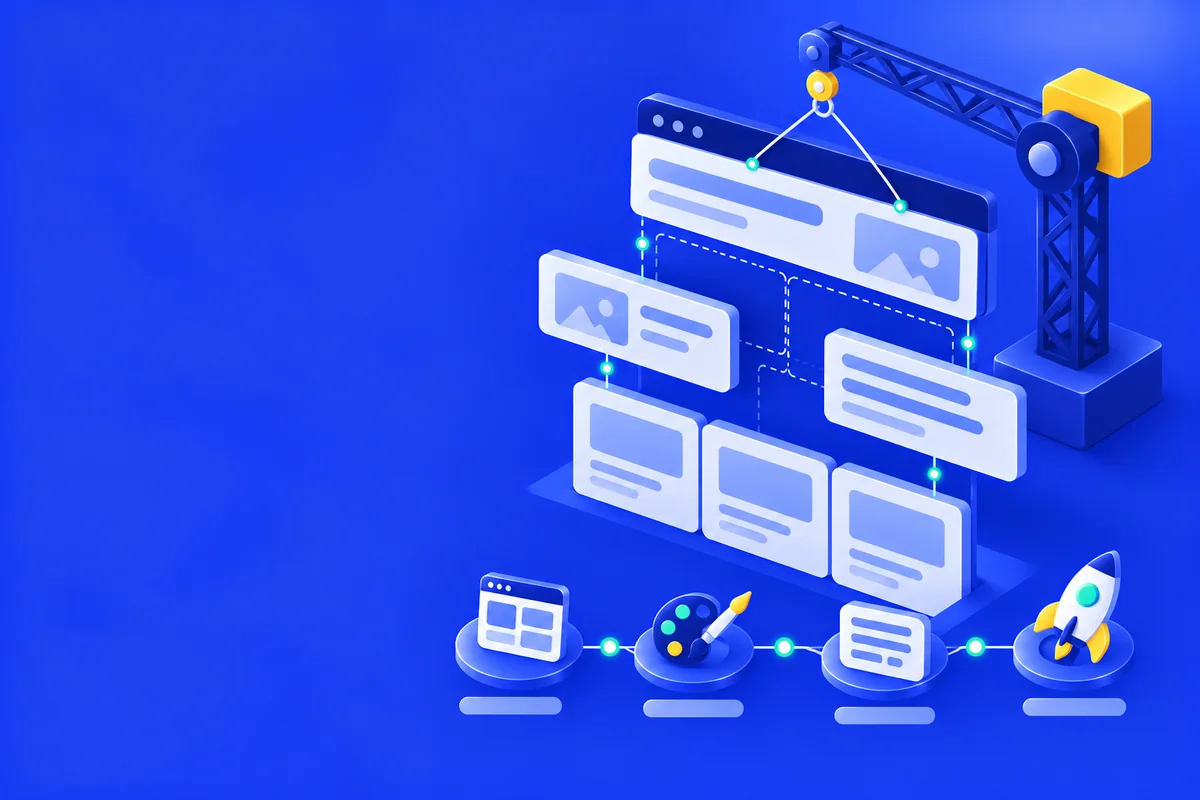
A business owner does not need a “site as a file”. They need a working tool that explains the offer and leads a visitor to an enquiry. Turnkey website development covers that. You describe the business and the goal, and one person takes the whole chain of work from structure to launch.
We build websites for small and medium businesses where the goal of the site is enquiries, not a showcase. We base decisions on research of the niche and of what people search for, not on a template.
What turnkey website development includes
What we take on from start to launch
Niche research, keyword research, page structure, design, build, forms and basic analytics. We build in structured data, a sitemap, redirects and a pre-publication audit from the start, so the site is ready for indexing without rework a month later.
How turnkey differs from improvements and redesign
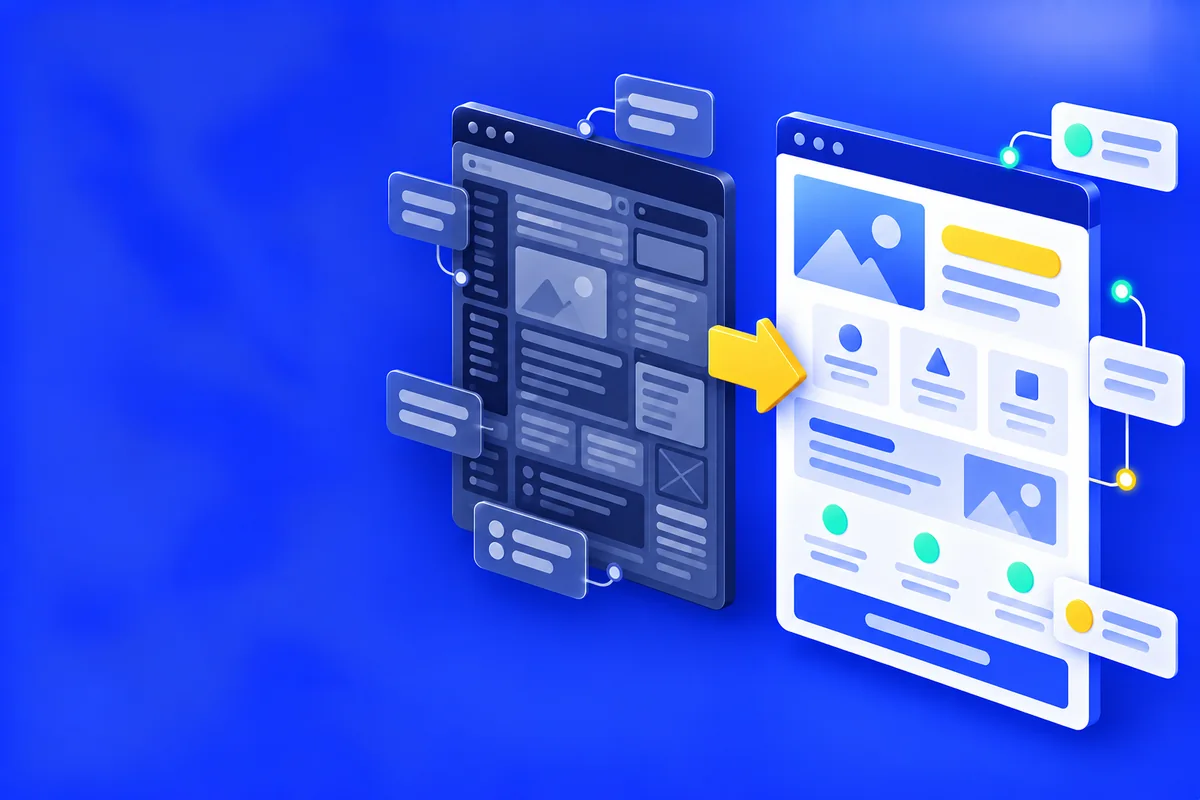
Turnkey means development from scratch, for when there is no site or the current one is not worth rebuilding. For one-off changes there is website improvements, and an outdated site is better rebuilt through website redesign.
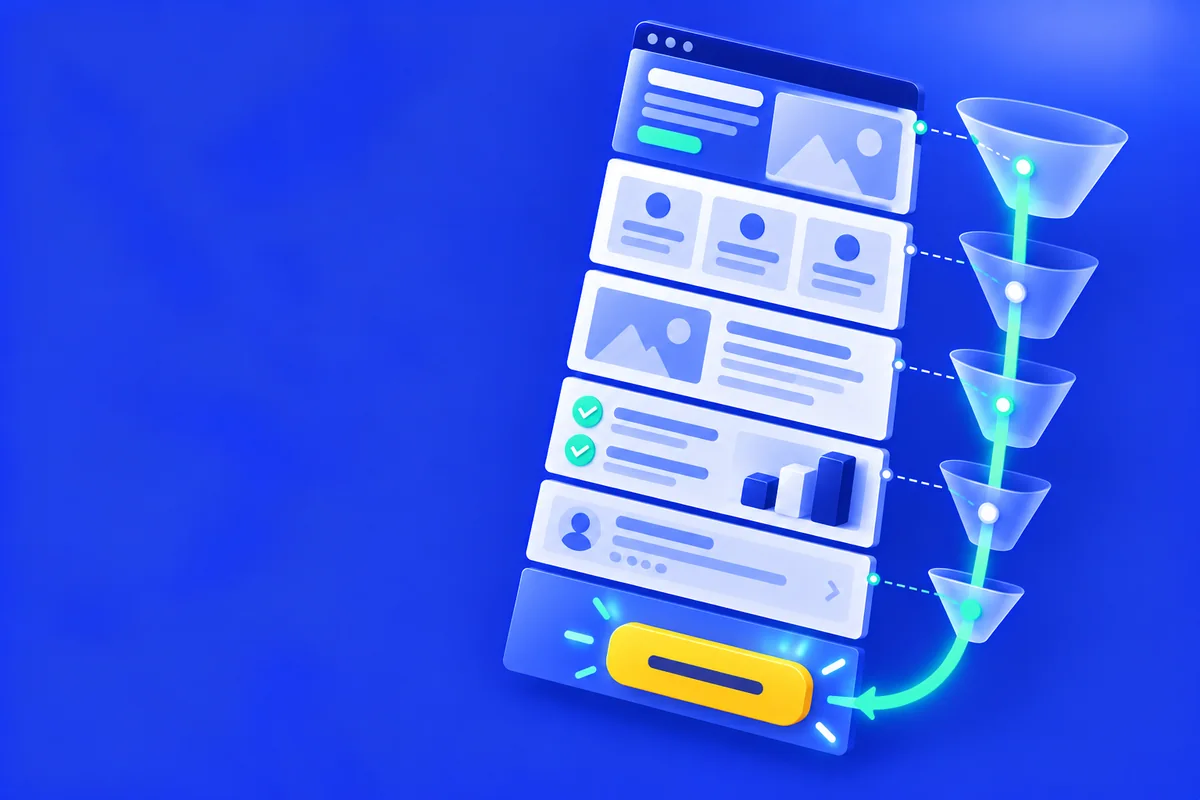
How we build a turnkey website: the stages
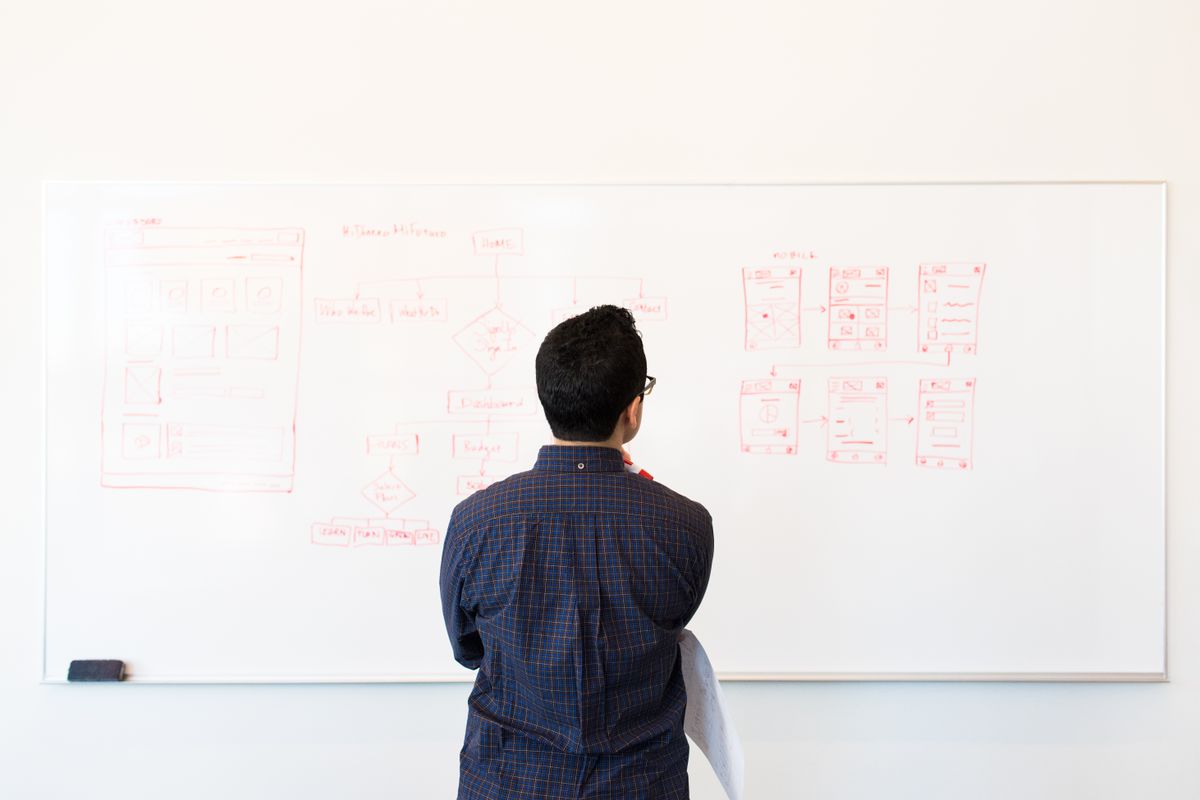
The process is the same for every type of site. Only the depth differs: a landing page needs less structure, a corporate site more.
Stages of work
- 01
Research and brief
We study the business, the audience and the goal of the site.
- 02
Keywords and structure
We choose the search queries and design pages and sections around them.
- 03
Design
We create the visual solution, responsive for phone and tablet.
- 04
Build and programming
We build the pages and connect forms, integrations and spam protection.
- 05
Technical audit before publication
We check speed, structured data, links and the mobile version.
- 06
Launch and basic analytics
We publish the site, connect counters and hand over access.
First we fix the goal and the structure, then adjust design and copy to them. If research shows the task is wider or narrower than expected, we correct the structure before design, not after the build.
What types of websites we build
The type of site sets the size of the structure, the number of pages and the logic of the copy. Two questions make the choice easier: how many services or business lines you have, and whether you need search promotion right away.
Landing page and brochure website
A landing page fits one offer and one target action. A brochure website is for a small business with several services: sections about the company, services and contacts without excess volume.
Corporate website and small business website
A corporate website fits companies with several business lines and projects. A small business website sits in between: it covers typical tasks of small companies without an oversized structure.
Website with SEO and website built with AI
Website development with SEO combines development and SEO: one person and one report across channels. A website built with AI describes our pipeline, where a person checks every fact before publication.
Online stores
We build online stores on our own platform: a catalog with filters, product pages, a cart and checkout. The admin panel is our own too: the manager updates products, sections and prices and uploads price lists from Excel or CSV without a programmer. Example: an online door handle store with 123 catalog sections and a parser for the supplier’s website.
The search foundation goes in from the start: meta tags and canonical on every page, product structured data and a sitemap. After launch the store can move on to ecommerce SEO.
What we do not build
Tilda sites as a separate service
We have experience with the builder, but we do not offer it as a separate service. For turnkey sites we use our own stack, which is easier to prepare for search and AI answers.

Not sure which site you need? We will review the task for free and suggest a suitable type of site.
What we build on and how, technically
Infrastructure and load speed
We host static sites on Cloudflare Pages with automatic deployment through GitHub Actions, with no manual file uploads. We check speed against Core Web Vitals: LCP within 2.5 seconds, INP within 200 milliseconds, CLS no higher than 0.1 (web.dev, Core Web Vitals).
Accessibility and semantic markup
One first-level heading per page and a consistent heading hierarchy with no skipped levels. Where it makes sense for the audience, we follow the WCAG 2.2 accessibility standard (W3C WAI, WCAG).
Three options for the technical base
| Option | Speed | Flexibility for the task | What comes next |
|---|---|---|---|
| Our stack (static, Cloudflare Pages, CI/CD) | High, with no extra server requests | High, blocks are built for the task | Easier to prepare for promotion |
| Ready-made CMS (WordPress, Bitrix and similar) | Medium, depends on hosting and plugins | Wide library of modules | Needs regular updates |
| Site builder (Tilda and similar) | Medium, depends on the platform | Limited by the builder | Fast start, harder to extend |
We choose a CMS or a builder if the client already has a team that works with it, or if a specific technical requirement calls for it.
Why we prepare a site for search and AI from the start
Structured data and the technical base for SEO
We add Schema.org structured data, using the Service type for service pages (Schema.org, Service). We set up the sitemap, redirects and indexing control in Google Search Console.
Ready for AI search from day one
In the structure we build in clear definitions and answers to common questions, the kind AI systems cite easily. We check how the site looks to several AI systems at launch. You can read more about the approach on the page about GEO: optimizing your site for AI search.
Who runs the project and what happens after launch
More about my experience is on the Aleksey Borovikov page.
After launch, services are added on request: one-off changes through website improvements and regular care through website maintenance. If the site is outdated, we discuss a redesign and start with a website prototype.